Role Scope
Full Turnkey Prefabricated Framing Package
Solution Type
Pre-Fab Framing
MERIT AWARD
2022 ABC Eastern Excellence Construction Awards
Despite experiencing more than 30 inches of snowfall and operating within one of the most constrained urban construction sites in downtown Allentown, Quality Buildings maintained framing progress through strategic use of prefabrication, just-in-time deliveries, and proactive field leadership. When severe winter weather threatened schedule performance, the team reassigned labor resources to snow removal efforts, helping preserve project momentum and maintain critical milestones.
Urban infill developments demand more than framing expertise. Success depends on logistics planning, equipment strategy, and the ability to adapt to site constraints that leave little room for error. By combining off-site prefabrication with precise delivery coordination, Quality Buildings demonstrated how challenging urban projects can maintain schedule certainty even when weather, access limitations, and site congestion threaten productivity.
Beating winter and a tight city lot to build vertical
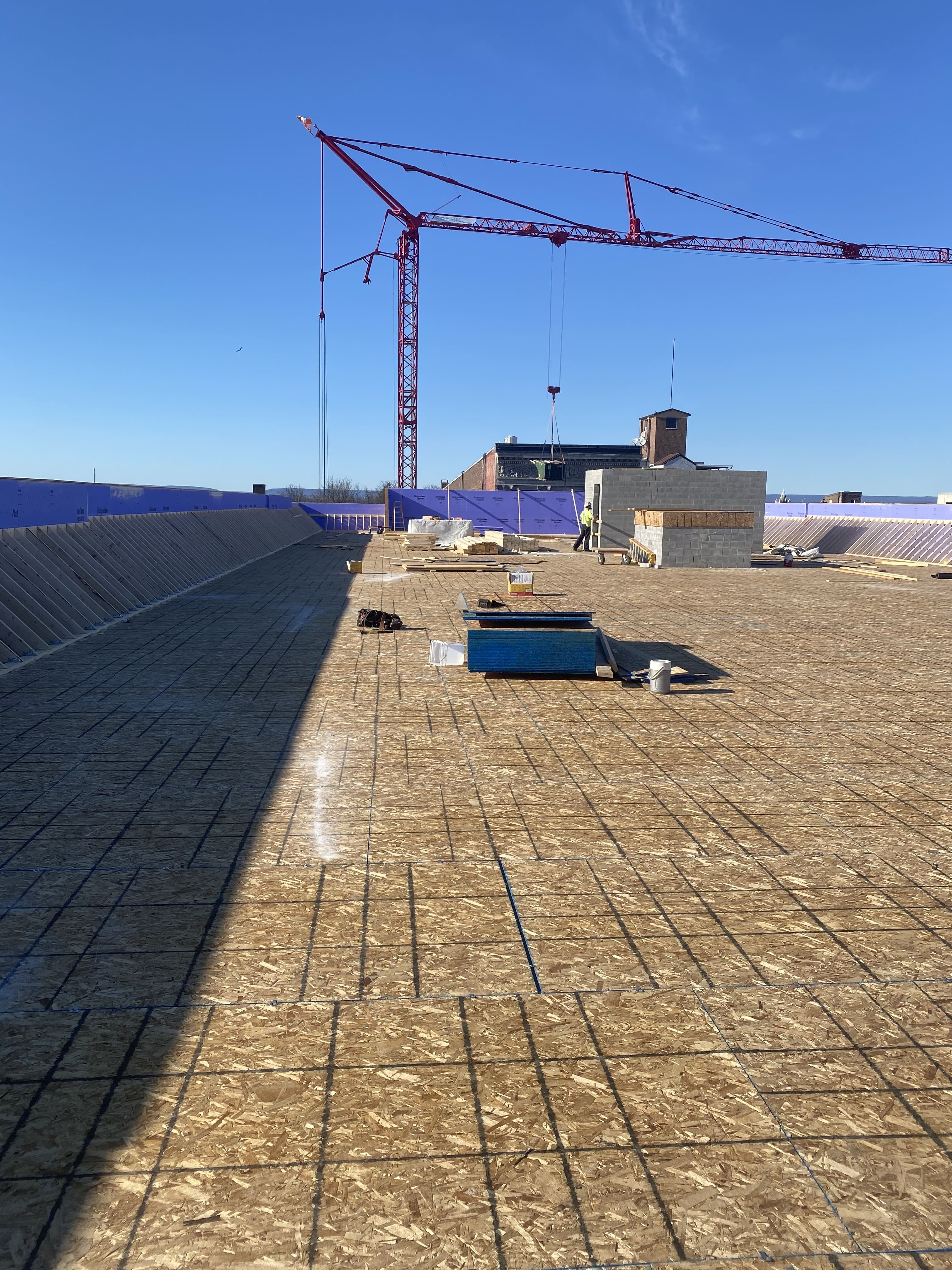
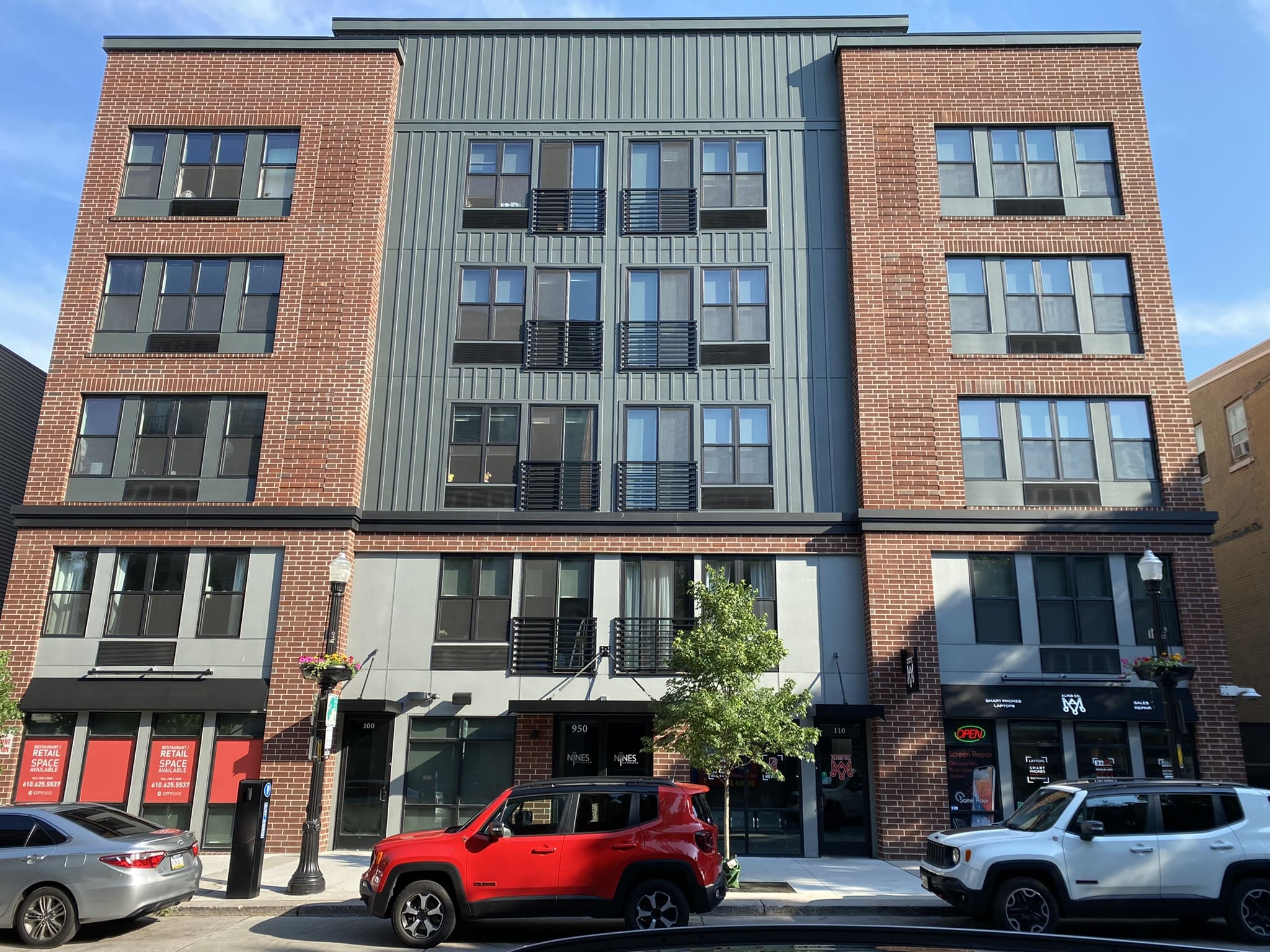
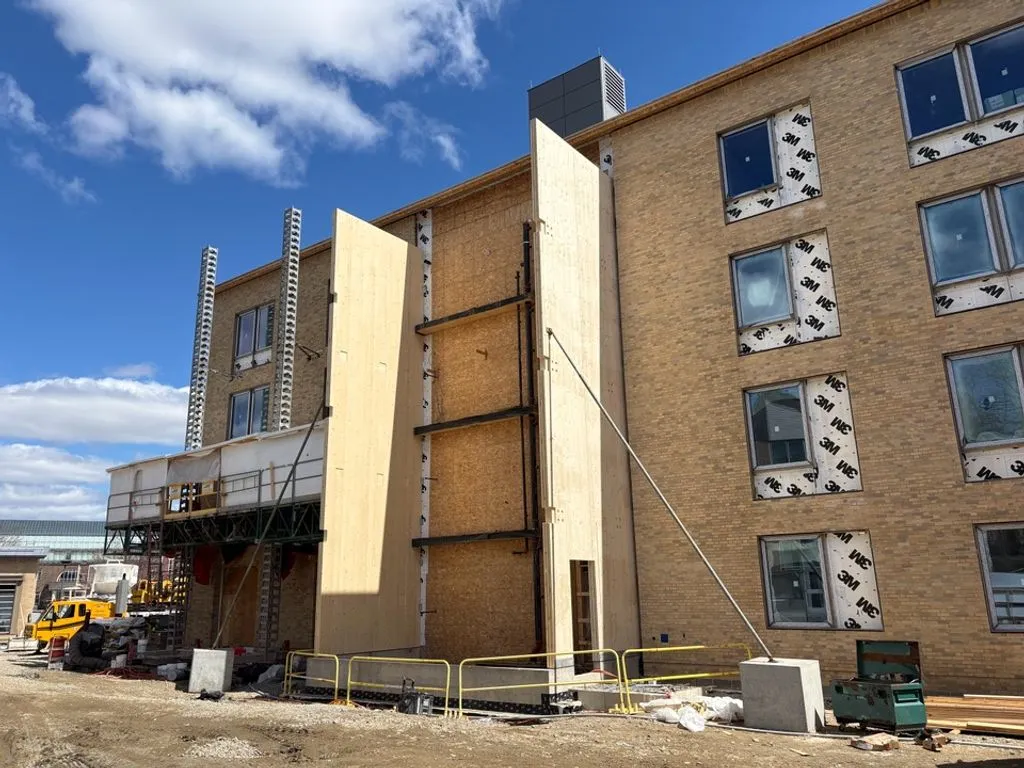
Located in the heart of downtown Allentown, the five-story Nines Apartments at 950 Hamilton Street features 78 luxury apartment units, ground-floor retail space, and a pedestrian walkway connected to a neighboring parking garage. The project is an urban infill development, repurposing vacant land to reduce urban sprawl. Quality Buildings served as the turnkey framing contractor, navigating a highly constrained urban site with proximity to electrical wires, over 30 inches of snowfall during construction, and extremely limited laydown space. Quality Buildings deployed a Potain Self-Erecting Tower Crane with a 165-foot reach to distribute panels directly from trucks parked alongside the building. An 80-foot boom lift and 10,000-lb telehandler completed the equipment fleet. Despite winter conditions and site restrictions, the team executed an aggressive 6-day framing duration per floor. Their phased delivery model eliminated the need for on-site storage and cutting, which was critical given the site's limitations.






.jpg)


.jpg)